

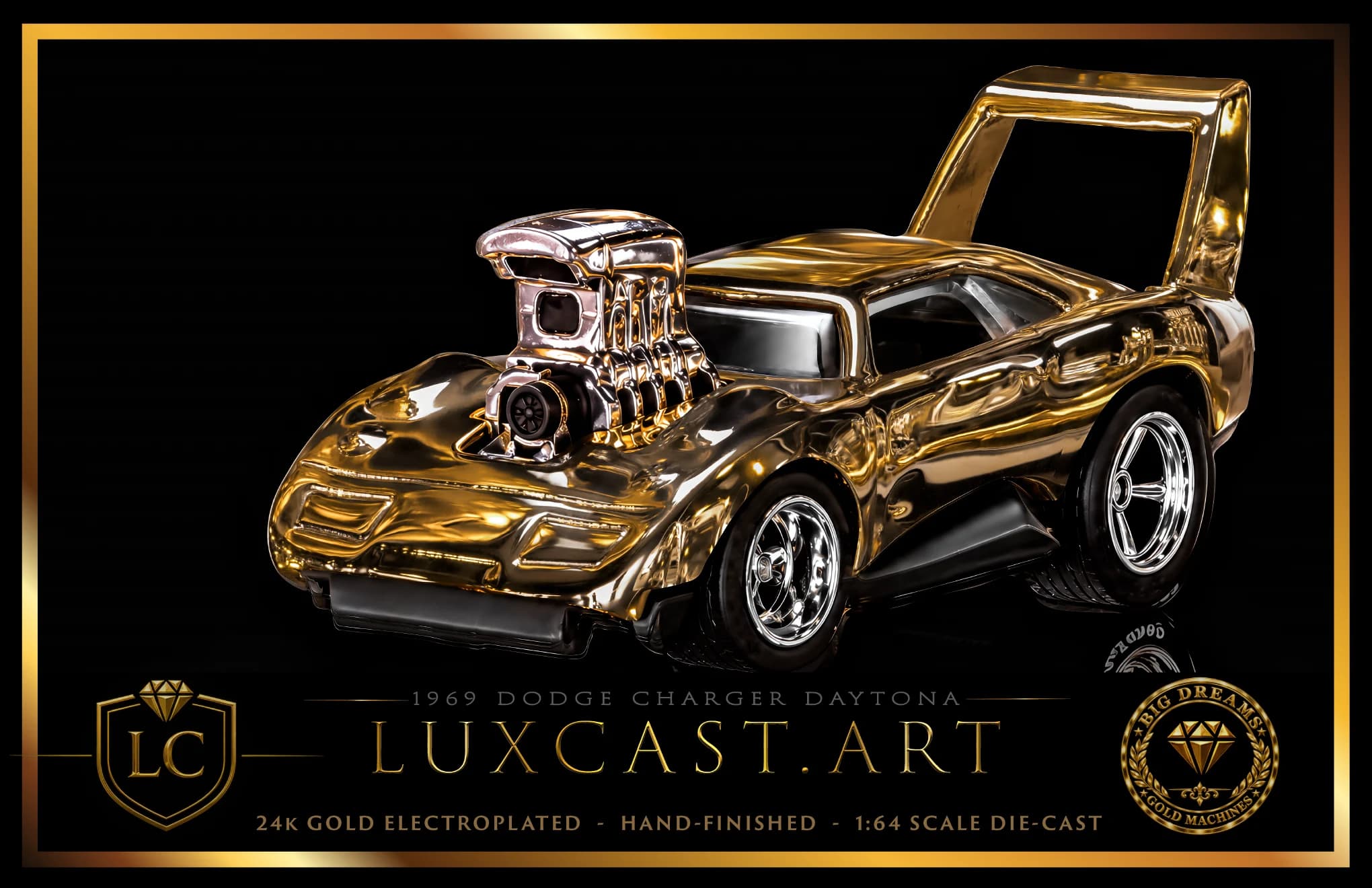
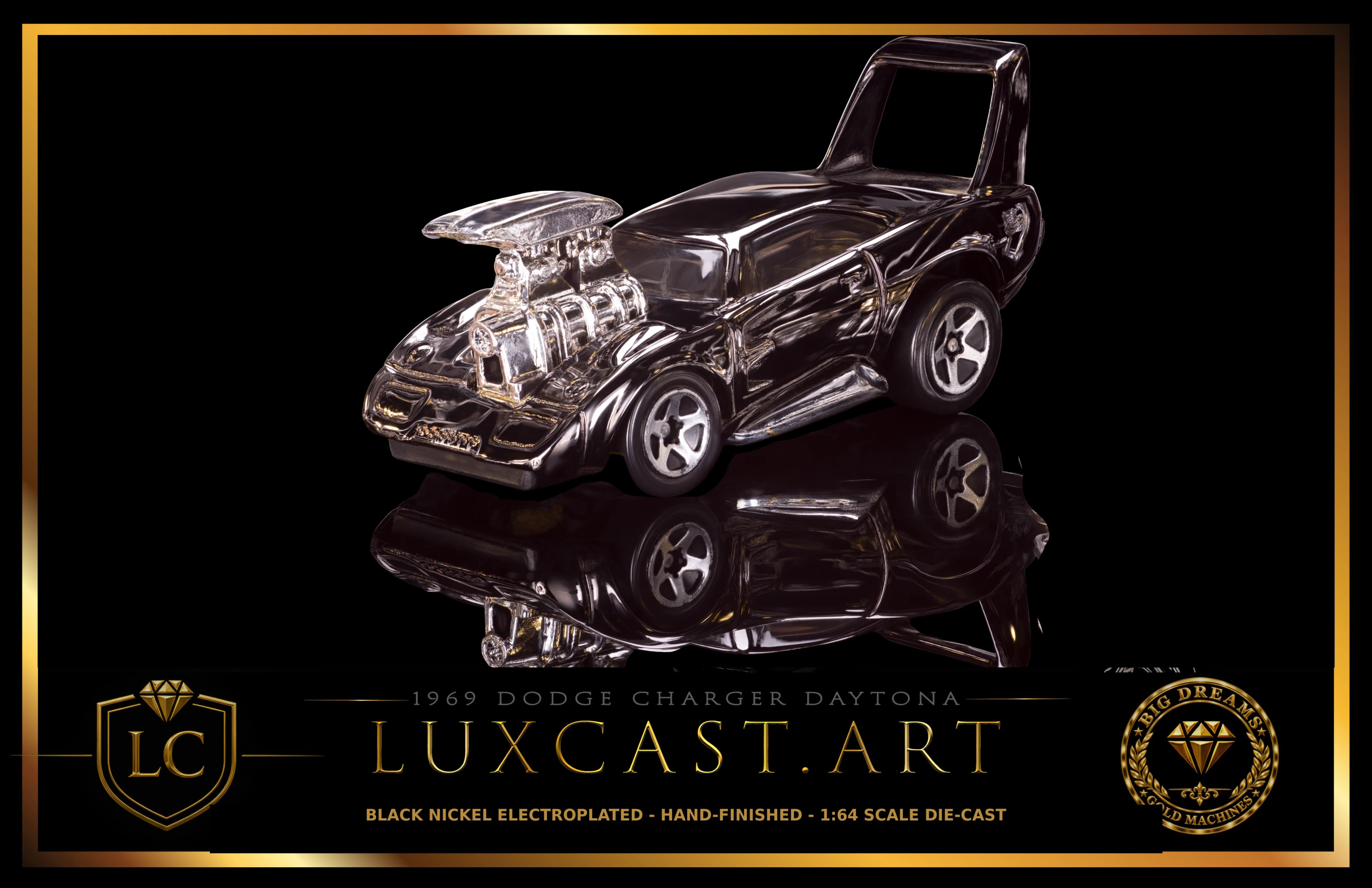
BLACK NICKEL COLLECTIBLE · 1969 DODGE CHARGER DAYTONA
Built for the Rulebook, Dressed for the Dark
Dodge needed a NASCAR weapon. The rulebook demanded a road car. The public got one of Detroit's strangest souvenirs.
In 1969, Dodge did something wonderfully unreasonable: it built a car to satisfy a racing rulebook—and let ordinary people buy one.
The result looked as though a wind tunnel had gotten into an argument with the styling department and won. There was a pointed nose up front, a wing on stilts out back, and barely an apology in sight.
Dodge Had a Ford Problem
Ford's streamlined stock cars were making life uncomfortable on NASCAR's fastest tracks. Dodge had already tried the Charger 500, smoothing the original Charger's troublesome recessed rear-window area. It helped, but not enough. At superspeedway speeds, the air itself becomes a competitor—and it doesn't care how impressive your engine is.
The Daytona kept the Charger 500's improved rear window, then added a nose extension roughly 18 inches long and a rear wing nearly two feet high. The nose helped the car push through the air; the wing helped keep it stable at speeds where a small aerodynamic mistake could become a very large problem.
The Rule That Put Wings in Showrooms
To qualify this special body for NASCAR, Dodge needed at least 500 street-going examples. That's homologation: you can't race the trick version unless ordinary buyers can get something recognizably like it.
Dodge built approximately 503 Daytonas, with specialty builder Creative Industries helping turn ordinary Chargers into these extraordinary road cars. Most carried a 440-cubic-inch V8 rated at 375 horsepower. The optional 426 Hemi, rated at 425, appeared in only about 70—fewer than one in seven. Those were period gross ratings, measured on a bare engine without accessories, so they read higher than a modern net rating of the same engine would.
A Darker Kind of Metal
Luxcast gives that race-bred design a very different transformation: black nickel electroplating. In electroplating, electric current deposits metal from a solution onto a prepared surface. The result is real metal, not black paint doing an impression of metal. Decorative black nickel typically uses dark nickel-based alloys, distinct from black chrome; the preparation underneath can influence the finished surface. What began as an answer to faster Fords becomes a piece of miniature metal sculpture.
There's an irony worth keeping. Some new Daytonas lingered on dealer lots despite discounts. Decades later, the car that once needed a buyer willing to overlook that enormous wing became a collector's prize.
The wing never got smaller. The audience finally caught up.