

FINE ART PHOTOGRAPHY OF 24K GOLD · VOLKSWAGEN T2 SINGLE CAB · LUXCAST #116
A Panoramic Window Changes the Whole Composition
The T2 proves that a windshield can be a graphic decision as much as a practical one.
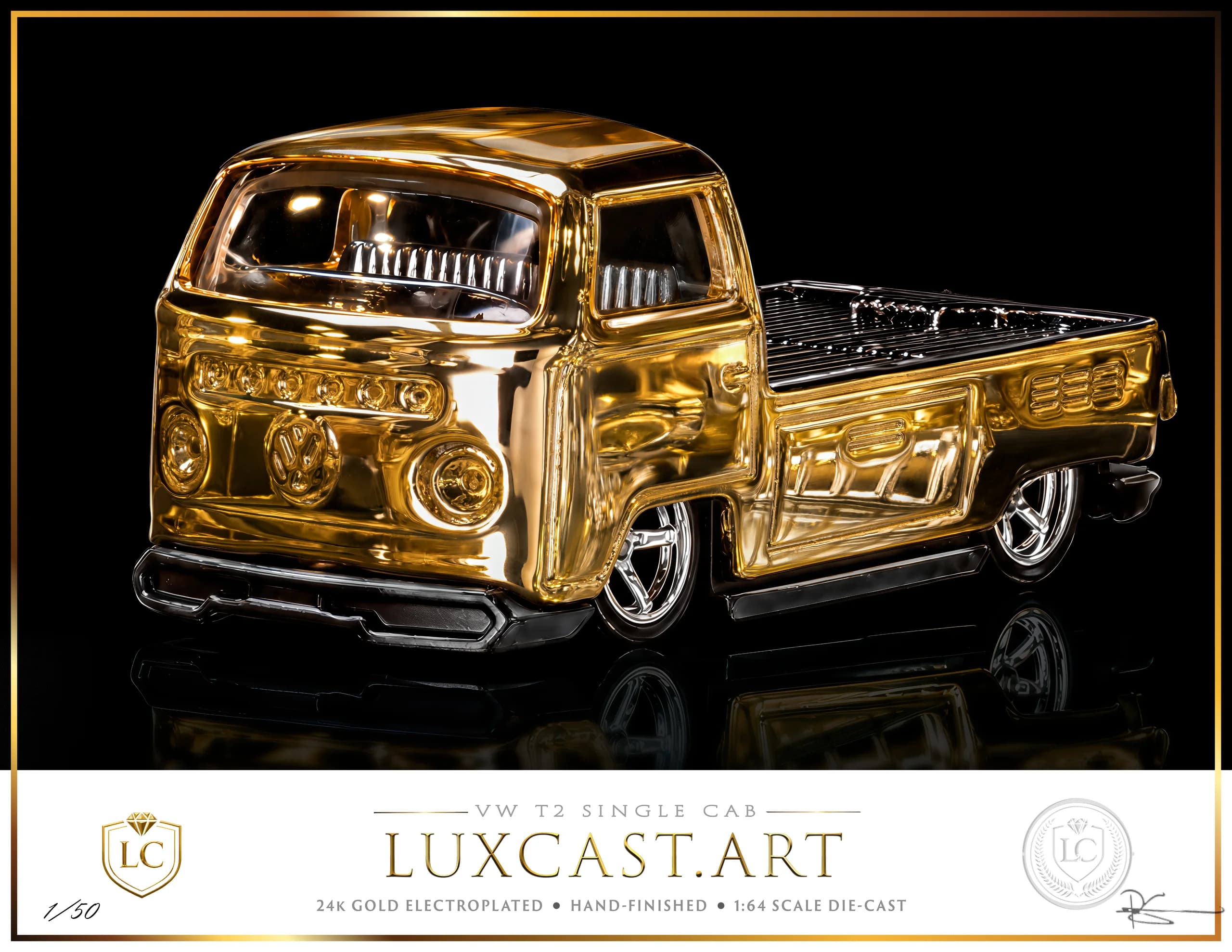
One of the biggest visual changes between Volkswagen's first and second-generation Transporters sits directly in front of the driver. The T1 has its divided front glass; the T2 presents a broad, single windshield. For a photographer, that one change reorganizes the entire front of the vehicle.
Where Glass Gives Light Away
The bright gold of the T2’s upright front end returns much of the studio toward the camera, but the single wide windshield behaves differently. Some light reflects from its surface; some passes into the dark interior; some is refracted at the boundary. In the actual photograph those competing paths produce a dark window interrupted by lighter shapes. Behind the cab, the nearly black cargo bed absorbs rather than shines. This is a three-material optical demonstration on a vehicle sold originally to carry work tools. The gold is the spectacle. The glass makes the physics visible.
A Frame for Light
On a Type 2 single-cab, the windshield acts as a large visual field above the comparatively simple nose. Its reflections can suggest the environment more strongly than many smaller body details. Surrounding metal panels, meanwhile, may reflect bright and dark shapes in a different way.
Glass and metal behave differently. Both can reflect light, but glass also transmits and refracts it. Miniature windshields, when present, often use clear plastic or resin and follow similar optical principles. A dark-looking windshield might result from the interior behind it, tint, surface reflection or the angle of observation. A mirror-polished plated nose typically reveals its surroundings through much stronger directional reflection.
That contrast gives the composition two optical languages in close proximity. One surface invites the eye inward; the other returns the studio outward.
The Honest Rectangles
The single-cab body balances that broad windshield against the long horizontal cargo bed. In a photograph, the forward cab and trailing platform create a natural visual route. Their simple geometry can be surprisingly refined when light is controlled and the important panel boundaries remain visible.
A slight change in camera height can make the windshield dominate the whole picture or merely frame the cabin. Viewed nearly head-on, the glass feels like a broad dark screen; from a lower three-quarter angle, the metal nose takes visual control. The object stays put. The photograph tells us which material to pay attention to first.
The windshield offers a glimpse inward. The metal gives the room back. The camera decides how those two worlds meet.