

FINE ART PHOTOGRAPHY OF 24K GOLD · 1969 DODGE CHARGER DAYTONA · LUXCAST #155
The Wing That Becomes a Frame
A single gold wing changes the way we look at the entire photograph.
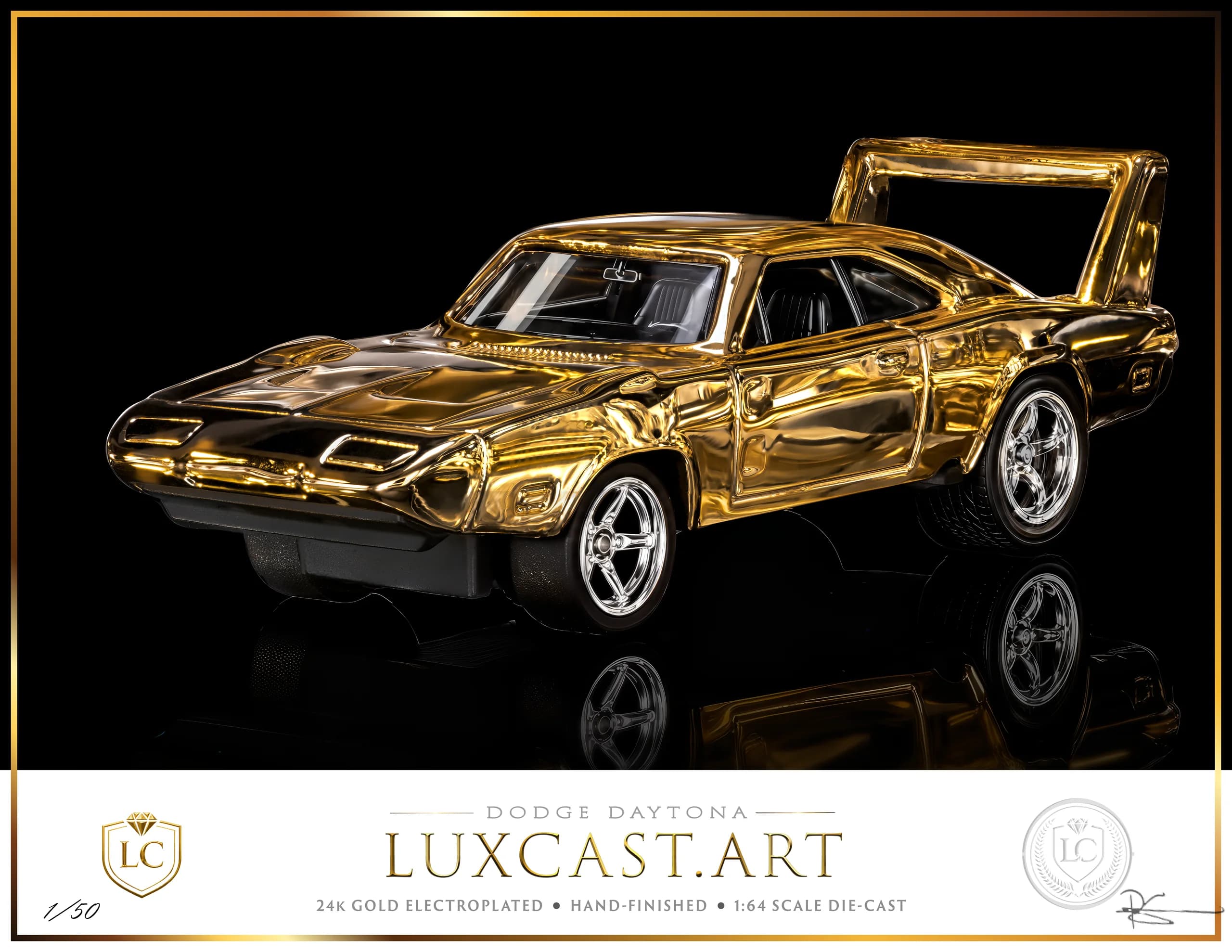
Where does a photograph of a winged car end? On this Daytona, the answer is not at the bodywork. It is at the giant rectangle hanging in the dark above the roof.
A Frame Inside a Frame
Look carefully at the finished Luxcast photograph. The car points down toward the left, with its closed hood extending into the foreground. Far above the rear deck, two uprights lift a gold wing that seems to draw a second frame around the upper-right corner of the image. The wing is not merely an accessory. It divides the surrounding blackness into shapes.
On a normal 1969 Charger, the roof and rear quarter would guide the eye toward the tail. On a Daytona, the wing sends the eye upward again. The photograph has to hold two competing movements at once: the long nose that pushes forward and the soaring rear structure that pulls backward.
Gold Makes the Geometry Legible
Luxcast's 24K gold is reflective enough for a strip of light to change character as it travels from hood to windshield to wing. On the long hood, highlights stretch. Across the upper wing, they become almost horizontal. Along the upright supports, the reflection turns vertical. Three pieces of physical metal create three lines without drawing any of them into the picture.
The Difference Between Speed and Motion
A panning photograph of a moving car can streak the background. This studio image does the opposite: everything is sharp enough to study the geometry. The tension comes from lines pointing in opposite directions and a huge aerodynamic appendage standing still. The black reflective floor reinforces the pose without pretending a blurred race circuit exists outside the frame.
You do not need motion blur to photograph a car designed for speed. Sometimes all the action is in the space around the wing.