

FINE ART PHOTOGRAPHY OF 24K GOLD · 1965 FORD MUSTANG FASTBACK · LUXCAST #190
A Roofline That Refuses to Stop
Why the 1965 Mustang fastback makes a photograph feel longer than the car.
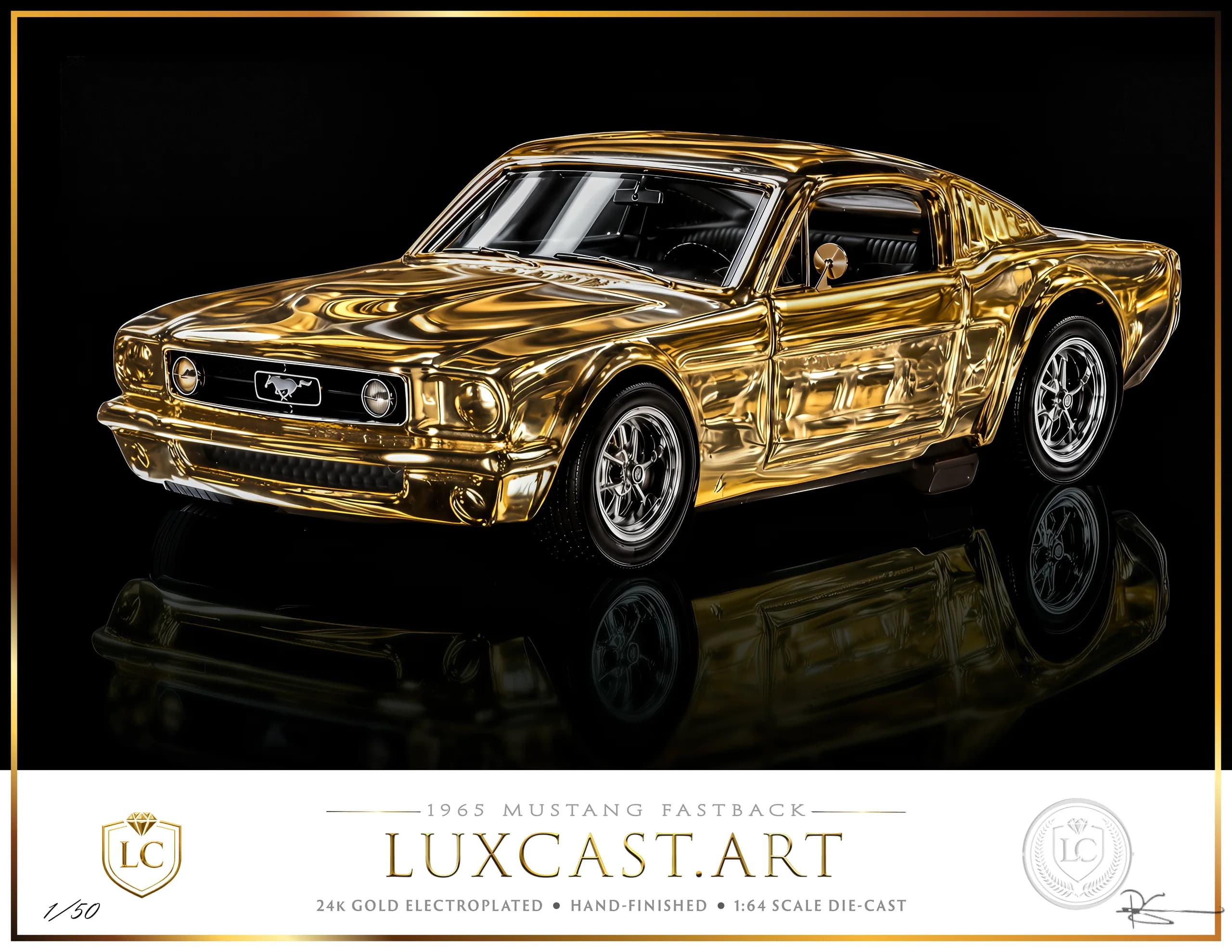
Good automotive design can persuade the eye to travel. The 1965 Mustang fastback is exceptionally good at giving directions. Its roof pulls back into the rear deck in one confident sweep, leading the viewer from windshield to tail without a sudden visual stop.
An Actual Line to Follow
Start at the base of the windshield in this 24K-gold Mustang image. A bright reflection climbs the A-pillar, travels across the curved roof, then sinks toward the rear quarter. You have just followed the defining feature of the fastback without being told the model name. It is an example of a leading line: a real highlight organizing the eye’s journey across a picture. The gold surface makes the line change intensity as the glass, roof and rear body meet. The design itself supplies the route.
The Nose Answers the Roof
Now look back to the Mustang's nose. The horizontal grille is nearly black, with the small running-horse badge held at its center, while the wide gold hood above catches complex reflections. That dark rectangle gives the eye a place to stop after following the long roof. Without the grille's interruption, the gold would compete with itself from front to rear. The photographer has two guides, not one: a diagonal high on the car and a dark horizontal anchor down low.
The Problem with Too Much Shine
An electroplated miniature can emphasize that continuity through carefully placed reflections. But a bright wash stretched over the entire roof may obscure the exact change in curvature. A dark reflected region can create separation; a thin strip of light can describe where the roof turns toward the rear glass.
Look again at the side-window opening: dark glass separates the roof from the tall door, preserving the identity of the fastback even when its gold finish is brilliant. A reflection is useful here only when it describes a real turn in the metal. The picture becomes a balance between things that lead the eye and things that let it rest.
The roof never actually moves. The viewer's eye does the traveling, and that is enough.